How Spray Booth Airflow Creates a Consistent Paint Finish
A smooth paint finish depends on more than the spray gun, coating, and painter’s technique. The air moving through the spray booth also plays a major role. Spray booth airflow helps carry overspray away from the work area, supports controlled drying conditions, and reduces the chance that airborne contaminants will settle onto a freshly coated surface.
When airflow is properly managed, the painter works in a more predictable environment. When it is uneven, restricted, or poorly balanced, the same coating process can produce noticeably different results from one area to another. Understanding how airflow behaves inside a spray booth makes it easier to identify finish problems and maintain consistent paint quality.
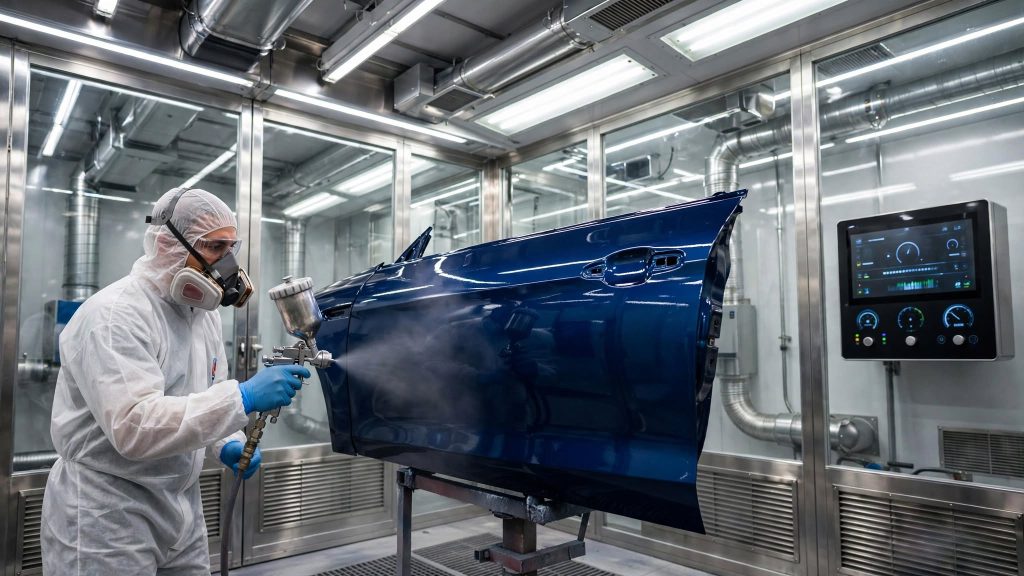
During spraying, a cloud of fine coating particles forms around the object being painted. Not every particle reaches the intended surface. Some remain suspended in the booth as overspray.
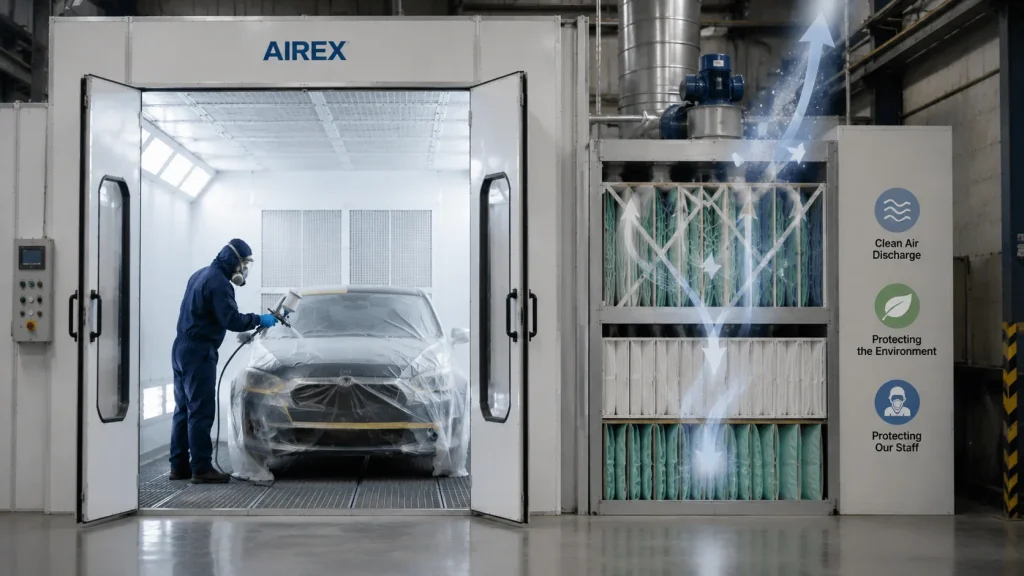
The ventilation system moves this airborne material toward the booth’s exhaust and filtration system. At the same time, filtered replacement air enters the booth to maintain a controlled flow through the work area.
This movement serves several practical purposes. It helps clear overspray, limits the amount of suspended material around the painted object, and reduces opportunities for dust and other particles to affect the wet coating.
Airflow also influences how solvent or moisture leaves the coating during flash-off and drying. For that reason, ventilation is closely connected with both application conditions and the appearance of the finished surface.
Not every booth directs air in the same way. The airflow pattern depends largely on the booth configuration.
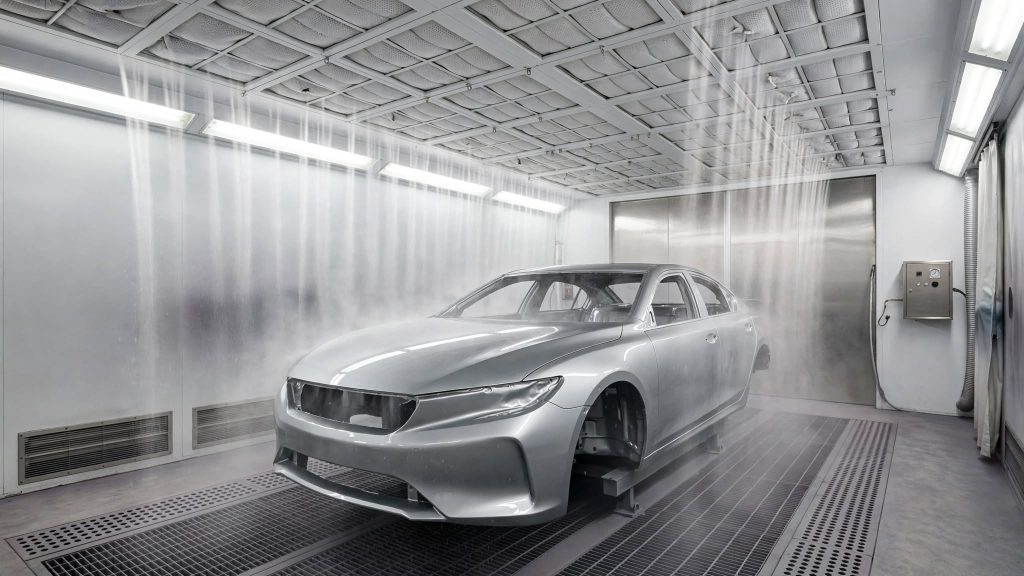
In a downdraft booth, filtered air generally enters from the ceiling and moves downward around the object before reaching exhaust points near or below floor level.
This arrangement carries overspray in the same general direction as the airflow, away from the upper surfaces of the workpiece. A well-balanced downdraft system can create a controlled painting environment around large or complex objects.
A crossdraft booth moves air horizontally. Fresh air enters from one end of the booth, travels across the work area, and exits through the opposite end.
Because air passes along the length of the object, painters need to consider the direction of airflow when planning their spraying sequence. Positioning and technique can affect how overspray moves around previously coated areas.
Other configurations combine vertical and horizontal air movement. Semi-downdraft booths introduce air from above and exhaust it toward one end, while side-draft systems pull air toward lower exhaust points along the booth walls.
Each design manages overspray differently. The important factor is not simply the direction of airflow but whether that flow remains stable and appropriate for the booth’s intended operation.
Consistent spray booth airflow creates a more predictable environment for coating application. The goal is controlled movement rather than simply moving as much air as possible.
If air movement is poorly distributed, some parts of the booth may clear overspray effectively while other areas allow it to linger. This can contribute to differences in surface appearance, particularly on larger workpieces.
Excessive or poorly directed air movement can also interfere with the spray pattern before the coating reaches the surface. Conversely, insufficient ventilation may allow overspray to remain around the work area longer than intended.
Air supply, exhaust performance, filtration, booth layout, and operating conditions therefore need to work together. This relationship is also an important part of How Modern Spray Booth Technology Improves Paint Finish Quality, since modern booth controls and ventilation components are designed to help maintain more stable application conditions.
Airflow alone cannot create a clean painting environment. The condition of the air entering and leaving the booth matters as well.
Intake filters help prevent dust and other unwanted particles from entering with replacement air. Exhaust filters capture paint overspray before exhausted air passes farther through the ventilation system.
As filters collect material, resistance to airflow can increase. If filters become excessively loaded or are installed incorrectly, the booth may no longer move air as intended.
This is why filter maintenance should be treated as part of airflow management rather than as a separate housekeeping task. Filters should be inspected and replaced according to the booth and filter manufacturers’ requirements instead of relying only on visual appearance.
A booth’s airflow pattern can change even when the ventilation equipment is operating. Everyday working conditions can affect how air moves around the object.
Common factors include:
Loaded, damaged, or incorrectly fitted filters
Blocked intake or exhaust areas
Parts positioned too close to airflow openings
Equipment or stored items obstructing air movement
Doors being opened during inappropriate stages of operation
Ventilation components that require inspection or maintenance
The size and shape of the workpiece can also influence airflow. A large vehicle body, panel, cabinet, or industrial component may redirect air and create sheltered areas behind or underneath it.
Keeping the booth arranged according to its intended operating design helps reduce these disruptions.
Paint defects rarely have only one possible cause. Coating preparation, spray-gun setup, temperature, humidity, application technique, and material selection can all contribute. Airflow should therefore be considered as one part of the troubleshooting process.
For example, airborne contamination may contribute to particles becoming trapped in a wet finish. Overspray that is not cleared effectively can settle on nearby areas and leave a rough or dry-looking texture. Uneven air movement may also contribute to inconsistent flash-off conditions across a large surface.
Before changing spray technique or coating settings, it can be useful to check whether the booth is operating under its normal ventilation conditions.
Routine observation can reveal problems before they become obvious in the finished coating. Operators should pay attention to filter condition, unusual changes in booth behavior, blocked ventilation areas, and the placement of workpieces and equipment.
Maintenance should follow the spray booth manufacturer’s procedures because ventilation systems are designed around specific components and operating conditions. Replacing filters with unsuitable products or modifying airflow paths without proper guidance can change how the booth performs.
Good housekeeping also matters. Keeping booth surfaces, intake areas, and surrounding workspaces clean reduces potential sources of contamination that airflow might otherwise carry toward a freshly painted surface.
Spray booth airflow is a fundamental part of creating repeatable painting conditions. It directs overspray away from the work area, works with filtration to control airborne contaminants, and helps maintain suitable conditions during application and drying.
The airflow pattern will vary between downdraft, crossdraft, side-draft, and other booth designs, but the underlying principle remains the same: air should move through the booth in a controlled and predictable way. Proper filter maintenance, unobstructed ventilation paths, sensible workpiece positioning, and regular system inspection all help preserve that balance.
When finish quality begins to vary, airflow is worth checking alongside paint materials, equipment settings, surface preparation, and spraying technique. A consistent finish usually comes from the entire application environment working together.