Retractable or Fixed Spray Booth: Which Fits Your Workflow?
Choosing between a retractable or fixed spray booth starts with a practical question: where does the work happen? A fixed booth gives spraying a permanent home. A retractable booth extends around a workpiece and folds away afterwards. Both can support controlled finishing, but they place different demands on floor space, material handling and daily scheduling. The better fit depends less on the booth’s appearance than on how jobs move through your workshop.
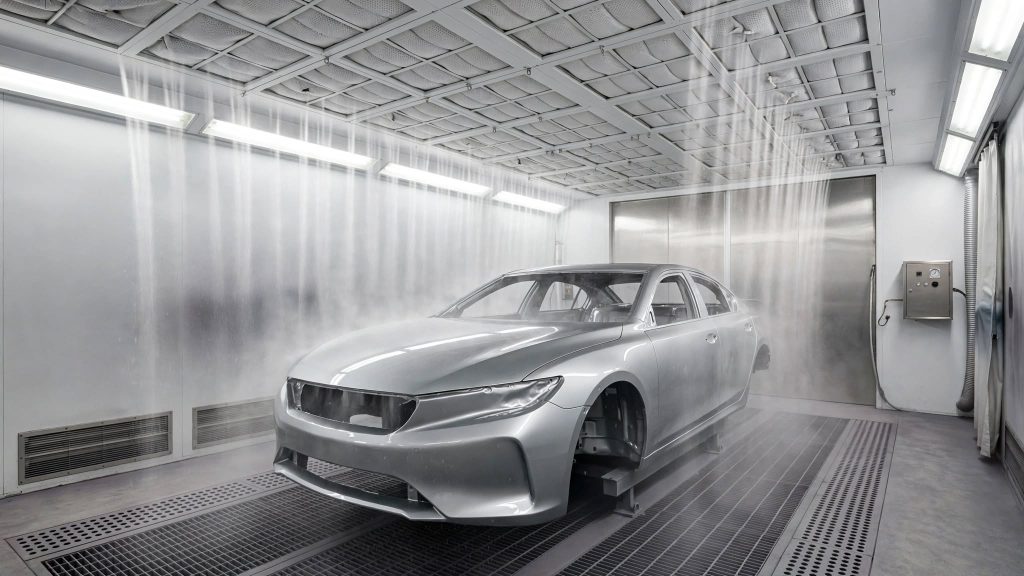
If most items are easy to move and follow a predictable route from preparation to spraying, a fixed booth can make sense. Operators know where each job goes, and the spray area stays ready for regular use. That arrangement is useful when finishing is a continuous part of production, and the workshop can dedicate space to it.
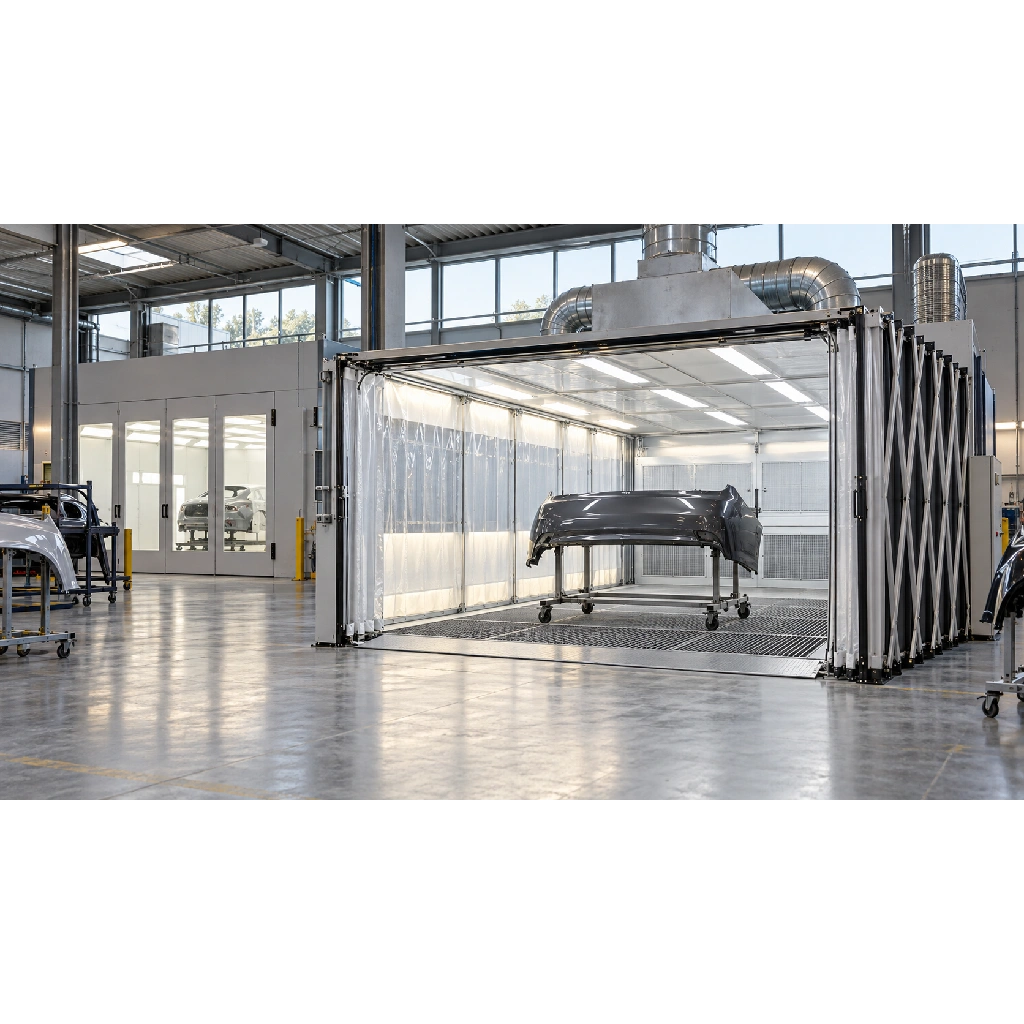
A retractable spray booth addresses a different problem: the item may be too large, heavy, or awkward to move conveniently into a permanent bay. The booth can be extended around a workpiece positioned for spraying, then retracted when the job is complete. This can reduce the handling involved in moving large components, although the surrounding area still needs enough room for the enclosure, operators, and extraction equipment.
Imagine a workshop that coats machinery frames but also uses the same floor area for assembly. Bringing each frame to a fixed booth could interrupt other work or require extra lifting. A retractable enclosure may let the frame stay in position while the spray area is created around it. The deciding factor is whether that shared space can be cleared and prepared reliably whenever spraying is scheduled.
A fixed spray booth occupies its allotted space even between jobs. That is a reasonable trade-off when spraying happens frequently enough to keep the bay busy. It can also simplify the workshop layout: preparation, spraying, and subsequent handling can be planned around a known location.
Retractable booths give a workshop more ways to use a bay. When folded away, the floor can return to other tasks such as staging or assembly. This flexibility is valuable in mixed production, where large finishing jobs arrive intermittently. However, the area is only available for other work when the booth is retracted, and the spraying process has been completed safely. A busy shared bay can create scheduling conflicts if other teams need the same space at the same time.
Consider access as well as area. Doors, lifting equipment, vehicle routes, and the position of nearby workstations affect whether an enclosure can be extended without obstructing normal operations. A floor plan should show the booth both open and closed, with the largest expected workpiece in place.
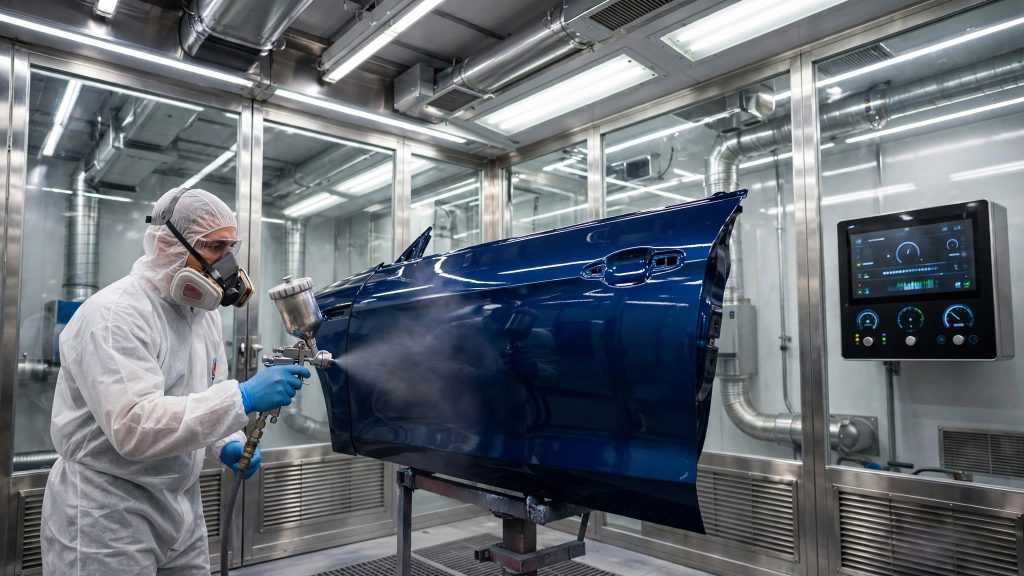
The enclosure is only one part of a spray booth. Airflow must carry overspray away from the operator and the workpiece, while filtration and extraction must suit the coatings and workload. A retractable system may use a dry filter or water wash extraction wall, depending on its design and application. Fixed booths also come in different configurations, so neither type has a single standard extraction arrangement.
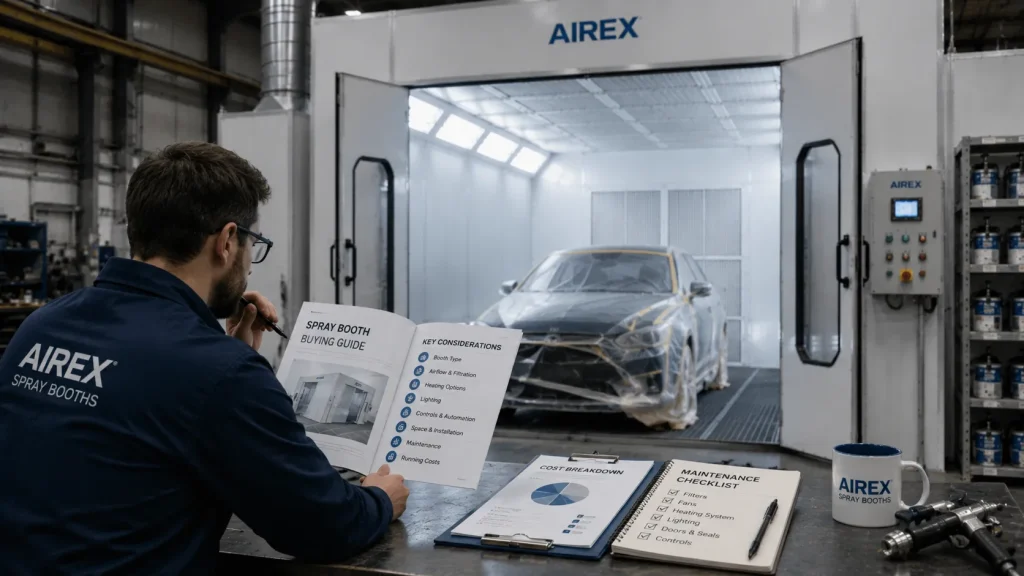
The frequency and volume of spraying matter here. Dry filter systems involve monitoring and replacing loaded filter media. Water wash systems require their own maintenance and may suit continuous, high-volume work. Compare these options against the materials being sprayed, expected operating hours, and the maintenance your team can manage. A booth that fits the floor but struggles with the actual workload is a poor match.
Think through a full job rather than the spraying step alone. Where will the item be prepared? How will it enter or be positioned within the spray area? Where will it go after coating, and how will that affect the next job? In a fixed booth, moving work in and out may become the main constraint. With a retractable booth, clearing and setting up the shared bay may be the constraint instead.
A retractable booth does not necessarily move around the site. Some systems remain associated with one bay and simply extend and fold away. A mobile retractable enclosure can be repositioned, but it needs extraction specified for spraying; an enclosure on its own should not be treated as a complete spray booth.
For example, a team that occasionally sprays vehicles or equipment at different locations may need a mobile enclosure paired with a suitable extraction unit. That is a different workflow from an industrial workshop coating large components in one building. The ability to fold away helps both, but transport, setup, power, and a suitable exhaust route become much more important for on-site work.
Before comparing booth designs, document how the operation works now and where delays occur:
These answers are more useful than choosing by footprint alone. They also help a booth supplier specify dimensions, access, and extraction around the real work rather than an average item that rarely represents the difficult jobs.
For more detailed information on this topic, read our guide on
A fixed booth is a strong candidate when work flows steadily through a dedicated finishing area. A retractable booth is worth considering when large workpieces stay put, or floor space has several uses. For either choice, check the complete route from preparation through spraying and onward handling, then confirm that the proposed airflow, filtration and maintenance plan fit the workload. The best layout is the one your team can use consistently without turning each spray job into a reshuffle of the workshop.