How Modern Spray Booth Technology Improves Paint Finish Quality
Achieving a consistent paint finish involves much more than selecting the right coating and applying it carefully. The environment in which paint is sprayed has a major influence on how the coating settles, dries, and ultimately looks. Dust, unstable airflow, temperature changes, overspray, and excess moisture can all contribute to visible defects.
Modern spray booth technology is designed to create a more controlled painting environment. By managing airflow, filtration, temperature, lighting, and other operating conditions, an appropriately designed booth can help painters achieve cleaner and more repeatable finishes. These improvements are relevant across automotive refinishing, manufacturing, industrial coating, furniture finishing, and other applications where surface quality matters.
Wet paint is particularly sensitive to its surroundings. Airborne particles can settle onto the surface, uncontrolled air movement may disturb the spray pattern, and unsuitable temperature or humidity conditions can affect how the coating behaves.
Painting in an uncontrolled workshop environment makes these variables harder to manage. A modern spray booth creates a dedicated enclosure where important conditions can be monitored and controlled more effectively.
This does not eliminate the need for correct surface preparation, suitable paint products, and good spraying technique. Instead, spray booth technology provides a more stable environment in which those elements can work together.
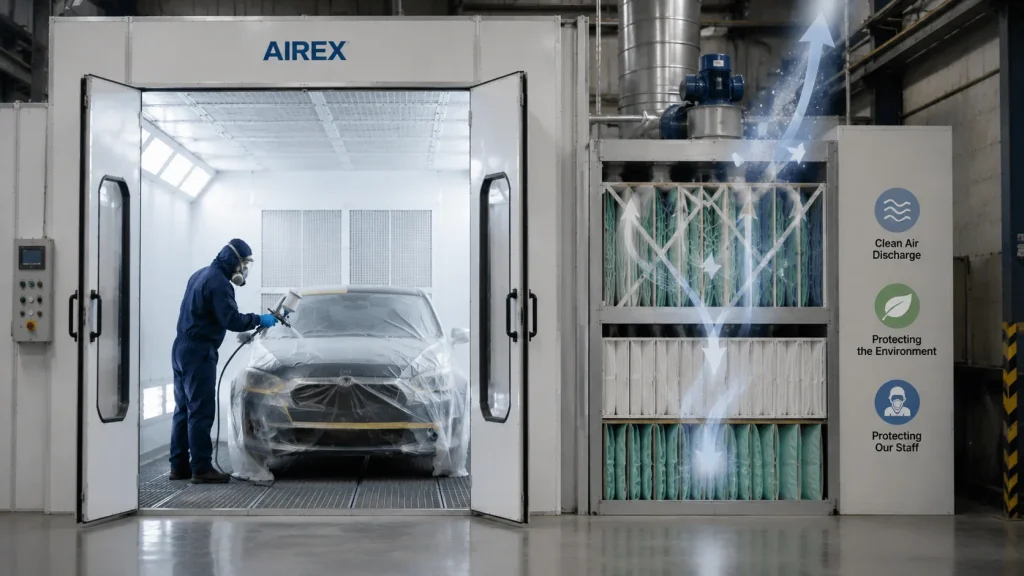
Airflow is one of the most important elements of spray booth performance. During spraying, the booth needs to move contaminated air and overspray away from the work area while supplying filtered replacement air.
Different booth designs manage airflow in different ways. Downdraft systems, for example, direct air from the upper part of the booth toward extraction points near or within the floor. Crossdraft configurations move air horizontally through the working area.
Poorly controlled air can allow overspray to circulate around a freshly coated surface. This may contribute to uneven texture or contamination.
A properly functioning ventilation system helps carry suspended paint particles toward the extraction and filtration system. More predictable airflow can also help the painter maintain a consistent spraying technique because sudden or irregular air movement is reduced.
Even small particles can become noticeable when they settle into a high-quality finish. Modern spray booths therefore use filtration at different stages to control incoming air and capture contaminants from extracted air.
Intake filters help remove dust and other particles before supplied air reaches the spraying area. Exhaust filtration is designed to capture paint overspray before extracted air moves further through the ventilation system.
Filter condition matters as much as filter design. As filters become loaded, airflow resistance can increase and booth performance may change. Routine inspection and replacement according to the booth and filter manufacturer’s requirements are therefore important for maintaining consistent operating conditions.
Coating materials are affected by temperature during application and curing. If conditions fluctuate significantly, paint viscosity, solvent evaporation, flash-off, and drying behaviour may become less predictable.
Modern spray booth systems may incorporate heating and temperature controls that allow operators to maintain conditions appropriate for the coating process.
Some spray booths can switch between spraying and curing or drying modes. During application, ventilation supports overspray removal and a suitable working environment. During the drying stage, controlled heat and airflow can help maintain the conditions required by the coating system.
The correct settings depend on the paint manufacturer’s technical requirements. Excessive heat or inappropriate drying conditions can create problems rather than improve the finish, so booth controls should be used as part of a defined coating process.
Lighting is sometimes overlooked when discussing paint finish quality, but painters need clear visibility to judge coverage, overlap, colour consistency, and developing surface defects.
Modern booths often use carefully positioned lighting to illuminate large areas of the workpiece while limiting distracting shadows. Consistent illumination can make it easier to identify missed areas or irregular application before the coating process progresses too far.
Lighting quality is especially useful when working on complex shapes, vehicle panels, machinery, or components with edges and recessed sections.
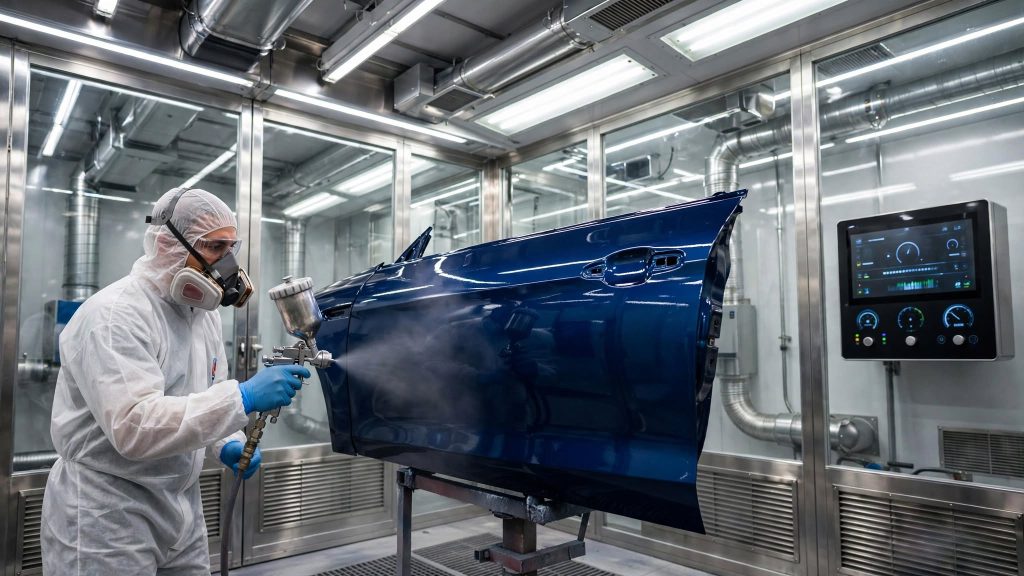
Modern spray booth technology increasingly uses control panels and automated functions to manage operating conditions. Depending on the booth configuration, operators may be able to control ventilation modes, temperature, drying cycles, and other process settings from a central interface.
Repeatability is the main practical advantage. When similar jobs require similar environmental conditions, predefined operating procedures can reduce unnecessary variation between coating cycles.
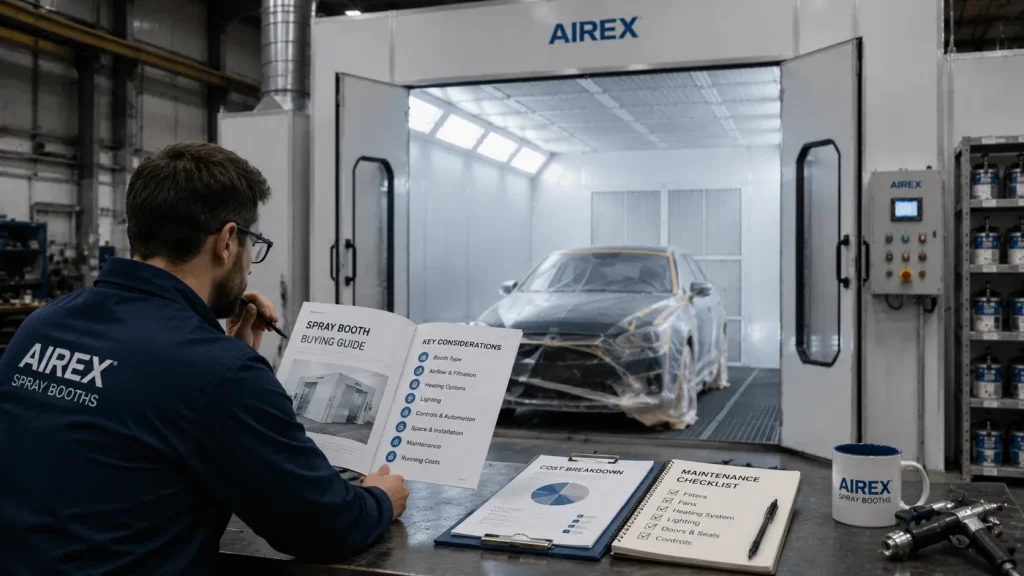
Digital controls cannot compensate for poor preparation or incorrect spray-gun settings, but they can make environmental variables easier to manage. Dive into expert content on the Spray Booth Buying Guide.
Advanced equipment still requires routine maintenance. A booth with clogged filters, contaminated surfaces, damaged seals, poor extraction, or malfunctioning controls may struggle to maintain the conditions it was designed to provide.
Useful maintenance practices include:
Checking intake and exhaust filters regularly
Keeping booth walls, floors, and working areas clean
Inspecting door seals and ventilation components
Monitoring airflow for unexpected changes
Maintaining lighting so the work area remains clearly visible
Servicing heating and control equipment as required
Maintenance schedules should reflect booth usage, coating type, manufacturer guidance, and actual operating conditions rather than relying on a single replacement interval for every installation.
A sophisticated spray booth cannot independently create a high-quality finish. Surface cleaning, sanding, masking, coating preparation, spray-gun setup, application distance, technique, and appropriate flash-off times remain important.
The strongest results come from combining good working practices with a controlled spray environment. For example, improved filtration offers limited benefit if a component enters the booth covered in dust. Similarly, stable temperature control cannot correct unsuitable paint preparation.
Modern spray booth technology should therefore be viewed as one part of a complete finishing process.
Modern spray booth technology improves paint finish quality primarily by giving painters greater control over the environment surrounding the coating process. Managed airflow can remove overspray more predictably, effective filtration can reduce contamination, temperature controls can support stable application and drying conditions, and suitable lighting helps operators assess their work accurately.
Digital controls can add consistency between jobs, but maintenance and operator technique remain equally important. When booth design, equipment condition, coating requirements, and painting practices are properly aligned, businesses can create a more controlled process and reduce avoidable causes of finish defects.